Why Buffalo Businesses Run on Rolling Steel Doors

Why Buffalo Businesses Run on Rolling Steel Doors

Walk through any industrial stretch of Buffalo, from the Tonawanda corridor to the warehouses near the I-90, and rolling steel doors are everywhere. They close off loading bays, secure service openings, and lock down storefronts and parking structures after hours. Businesses choose them because they are strong, they save space, and they take abuse. When one stops rolling, though, the opening it protects is either wide open or sealed shut, and the business needs business door repair from a contractor who knows the system. A-24 Hour Door National Inc. services rolling steel doors across Buffalo and Western New York.

A rolling steel door is built differently from a sectional overhead door. Instead of hinged panels, it uses a curtain of interlocking steel slats that coil around a barrel mounted above the opening. That design lets the door disappear into a compact coil overhead, which is why rolling steel suits openings where there is no room for track to run back along the ceiling. The trade-off is a set of parts, the curtain, barrel, tracks, and counterbalance, that wear in their own particular ways and call for their own repair approach.
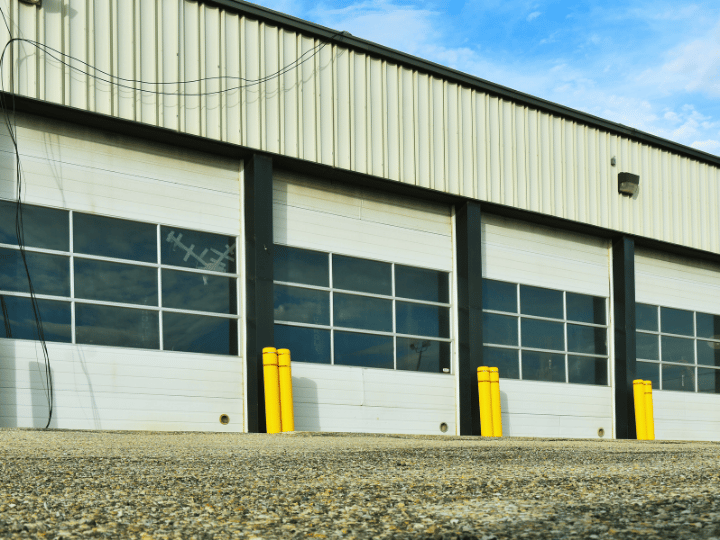
The Curtain Coils, It Does Not Fold

A rolling steel door coils its interlocking slats around a barrel above the opening instead of folding on tracks, which is why it fits Buffalo openings with no overhead room and why its repair focuses on the curtain, tracks, and barrel.

One Bent Slat Can Stop the Door

When a forklift or truck bends a single slat, that slat drags against the tracks and can jam the whole curtain, and on many rolling steel doors the damaged slat can be replaced individually rather than recurtaining the entire opening.

Salt and Ice Attack the Guides

Buffalo road salt corrodes rolling steel tracks and the bottom bar while ice forms inside the tracks, and a corroded or frozen track grabs the curtain, which makes track and bottom-bar inspection central to Buffalo rolling steel repair.

Where Rolling Steel Earns Its Place

Rolling steel doors show up where strength and security matter most. Warehouses and distribution centers use them on loading and service openings that see heavy daily traffic. Industrial buildings use them where a door has to resist impact and force. Retail properties and parking structures use rolling grilles and closures to secure an opening after business hours while keeping it open to airflow and sightlines during the day. For a Buffalo business weighing security against space, rolling steel often wins, and keeping it working is where business door repair comes in.

The security role is the reason a failed rolling steel door is urgent. A curtain stuck open leaves an industrial or retail opening exposed, and a curtain jammed shut can trap inventory or block an exit. Neither state is one a business can leave overnight, so rolling steel repair frequently becomes an after-hours call, which is where a 24/7 contractor with stocked trucks matters.

How Rolling Steel Doors Fail

Rolling steel doors fail in ways specific to their design. The curtain can come out of its tracks, from an impact or from bent slats, and a curtain off its tracks will bind or jam. Individual slats bend or crimp when a forklift or a truck strikes the door, and a damaged slat drags against the tracks. The barrel's counterbalance spring, hidden inside the coil, carries the curtain's weight and can lose tension or break over time. Worn tracks, dry bearings, and a failing operator round out the common list. On a manual door, the chain hoist or crank mechanism wears as well.

Buffalo conditions add their own failures. Road salt and slush corrode the tracks and the bottom bar, and a corroded track grabs the curtain instead of letting it run. Ice forms in the tracks and along the threshold, and a curtain frozen to its tracks can tear when the operator forces it up. Cold stiffens the grease in the barrel bearings and slows the whole assembly. A technician handling business door repair on a Buffalo rolling steel door checks the tracks, the bottom bar, and the barrel for this winter wear, because the salt-and-ice pattern here is harder on these doors than in milder markets.

Repair, Not Replace, When the Door Allows

A rolling steel door is a heavy investment, and much of the time a failure is a repair rather than a replacement. A curtain knocked out of its tracks can often be re-seated and the tracks straightened. Bent slats can be replaced individually on many doors rather than recurtaining the whole opening. A weak or broken counterbalance spring can be re-tensioned or replaced. A worn operator can be rebuilt or swapped. A-24 diagnoses the failure and repairs what can be repaired, which keeps a Buffalo business from paying for a full door when a component fix restores it. When a curtain is too damaged to save, replacement is the honest call, and the company handles that as well.

One Contractor for the Whole Opening

Rolling steel work draws on both mechanical and security knowledge, and it rewards a contractor who services these doors regularly rather than one who sees them occasionally. A-24 Hour Door National Inc. carries curtain hardware, track parts, springs, bearings, and operator components on its trucks, and its technicians handle rolling steel service doors, rolling grilles, and security gates as core work. OEM parts with manufacturer warranties go back into the door, so the repair holds. For automatic and operator-driven doors, the AAADM-certified technicians handle the safety and control side correctly.

Manual and Motorized Rolling Steel

Rolling steel doors come in manual and motorized versions, and each brings its own service needs. A manual rolling door uses a chain hoist or a crank to raise and lower the curtain, and the chain, sprockets, and reduction gears wear over time and can slip or bind. A motorized rolling door adds an operator, along with the controls, limit switches, and safety devices that stop the door on an obstruction. On a busy Buffalo loading opening, a motorized door saves labor and speeds traffic, but it adds the operator and its electronics to the list of parts that can fail. A-24 services both, so a facility with a mix of manual and motorized rolling steel has one contractor for all of it, and business door repair covers the whole range from the chain hoist to the operator board.

Fire-Rated Rolling Steel Doors

Some rolling steel doors do a second job beyond security: they are fire doors. A fire-rated rolling steel door is designed to close automatically and seal an opening during a fire, holding back flame and smoke to protect a building's occupants and structure. These doors carry a label and are governed by NFPA 80, which calls for annual inspection and testing of the drop-release mechanism and the door's condition. A fire-rated rolling door that has been painted over, blocked, or left untested may not perform when it is needed, and that is a life-safety and code exposure for a Buffalo building. A-24 services and helps maintain fire-rated rolling steel doors to the NFPA 80 standard, framed as compliance and life-safety work rather than a guarantee of passing any given inspection. For a warehouse or industrial building with fire-rated rolling doors, keeping them in working order is part of responsible business door repair, not an afterthought.

What to Look for in a Rolling Steel Contractor

Not every door company handles rolling steel well, and the difference matters on a door this heavy and this tied to security. A rolling steel contractor should carry curtain, track, spring, bearing, and operator parts on the truck, understand both manual and motorized systems, and know the fire-rated versions and their NFPA 80 requirements. The technician should be able to re-seat a curtain, straighten or replace tracks, swap individual slats, and re-tension a counterbalance, rather than defaulting to a full replacement on every failure. A-24 brings that range to business door repair on rolling steel, which keeps a Buffalo property from replacing a door that a component fix would restore.

Response time is the other half. Because a failed rolling steel door leaves an opening exposed or sealed, the repair often cannot wait, and a contractor that answers nights, weekends, and holidays is what keeps a Buffalo building secure until the curtain is running again. A-24's 24/7 line and same-day service in most cases are built for exactly that situation.

The rolling steel doors that give the least trouble are the ones that get serviced before they fail. A curtain that is starting to run rough, a track showing corrosion, or a counterbalance losing tension is a door heading toward a jam, and catching it during a service visit is cheaper and less costly than an after-hours emergency. A-24 provides that preventive service alongside its emergency work, so a facility manager can keep the security openings working through the Buffalo winter rather than reacting to a failure in the cold.

A rolling steel door that runs on demand keeps a Buffalo opening secure and a business moving, and that reliability is the whole point of the repair. A-24 restores it on the manual and motorized rolling doors, grilles, and gates that Buffalo warehouses, industrial buildings, and storefronts rely on, with the parts on the truck and the training to do it right the first time.

The company answers around the clock from 344 Sycamore Street in Buffalo, with same-day service in most cases across Buffalo, Cheektowaga, Tonawanda, Lackawanna, and the Erie County industrial corridor, backed by more than 30 years in the local commercial door market. When a rolling steel door will not roll, the opening it guards is at risk until it is fixed. For dependable business door repair on a rolling steel door, contact business door repair from A-24 Hour Door National at (716) 894-2000 for service or a free phone quote.

Redirect to:


Frequently Asked Questions


Often, yes. A curtain knocked from its tracks can be re-seated, bent slats can frequently be replaced individually, a weak counterbalance spring can be re-tensioned or replaced, and a worn operator can be rebuilt or swapped. A-24 Hour Door repairs what can be repaired and recommends replacement only when a curtain is too damaged to save.
Road salt and slush corrode the tracks and bottom bar, ice forms in the tracks and at the threshold, and cold stiffens the barrel bearings. A corroded or iced track grabs the curtain instead of letting it run. A-24 Hour Door checks the tracks, bottom bar, and barrel for this winter wear on every Buffalo rolling steel repair.